Sponsored article
Interprofessional education in healthcare is crucial for fostering teamwork and improving patient outcomes. However, traditional training methods often fall short in simulating real-world scenarios and encourage collaboration. Enter virtual reality: a cutting-edge technology that offers immersive, realistic training environments. By utilizing VR, healthcare educators can create dynamic, interactive experiences that bridge the gap between theory and practice, transforming how professionals learn and work together.
Virtual reality is revolutionizing collaboration in healthcare education by offering immersive scenarios that significantly enhance team-building and communication skills. This innovative approach allows healthcare professionals to engage in realistic and interactive simulations, where they can practice responding to dynamic, real-world situations as a cohesive unit. By immersing participants in a controlled environment that mimics actual healthcare settings, virtual reality fosters an understanding of the complex dynamics that occur in clinical teams. It enables participants to explore their roles and responsibilities while learning to appreciate the contributions of other team members.
These virtual scenarios are invaluable for improving communication as they require clear articulation of ideas and strategies among team members, ensuring everyone is on the same page. Such real-time interactions help to cultivate a shared mental model, crucial for effective healthcare delivery. This innovative method not only builds professional confidence but also bridges gaps in traditional training methods. By offering a cutting-edge solution for interprofessional education, virtual reality represents a powerful tool in [healthcare training innovation](https://spirit-sbe.eu/project-overview/), ultimately leading to better coordinated patient care and improved healthcare outcomes.
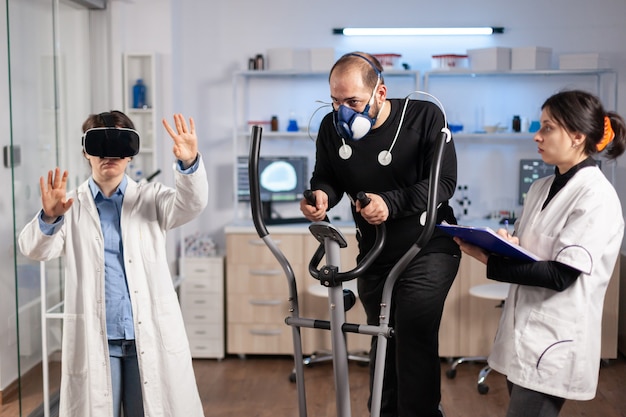
Virtual reality is revolutionizing skill development in healthcare by offering a unique and immersive platform for virtual reality training, where healthcare professionals can engage in realistic simulations without the risks associated with traditional hands-on experience. This advanced technology allows practitioners to practice and refine their skills in a safe and controlled virtual environment, bridging the gap between theoretical learning and practical application. Through VR simulations, healthcare professionals can perform complex procedures, make critical decisions, and collaborate with interdisciplinary teams, all without the constraints of physical resources or geographical limitations.
Moreover, the use of virtual reality training for skill development in healthcare not only enhances proficiency but also boosts confidence among practitioners by providing repeated and varied practice. This innovative approach to simulation offers interactive and memorable experiences that are crucial for effective learning. By leveraging VR technology, healthcare professionals are better equipped to handle real-world challenges, significantly improving patient outcomes and fostering a more competent and confident workforce.
Interprofessional education (IPE) plays a vital role in preparing healthcare professionals to work collaboratively across disciplines, but it often encounters significant barriers. Traditional IPE can be costly and logistically challenging, particularly in terms of scheduling and resource allocation. However, virtual reality solutions present a promising approach to overcoming these barriers. Through immersive and interactive environments, VR allows participants from various locations to engage in realistic simulations, breaking down geographic accessibility issues while fostering effective teamwork. By leveraging VR technology, institutions can create scalable training programs that reach a broader audience without the need for expensive facilities or extensive travel, thus significantly reducing both time and financial constraints.
Moreover, the cost-effectiveness of VR solutions is a game changer for interprofessional education. Not only does VR minimize the need for physical spaces and equipment, but it also allows for repeated practice without additional cost, enhancing skill retention and confidence among participants. The adaptability of VR platforms supports diverse learning needs, accommodating a range of learning styles and paces, which is crucial for effective education. VR’s potential to democratize access to high-quality training cannot be overstated, and its capabilities extend to addressing multiple challenges in IPE settings, including:
Harnessing virtual reality solutions, therefore, represents a strategic pathway to revolutionizing interprofessional education by removing traditional barriers and fostering an inclusive, flexible, and efficient learning environment.